Overcome Engineering Challenges and Returning to Microgravity: Supporting Human Physiology Research on the 89th ESA Parabolic Flight Campaign
- Jun 26
- 4 min read
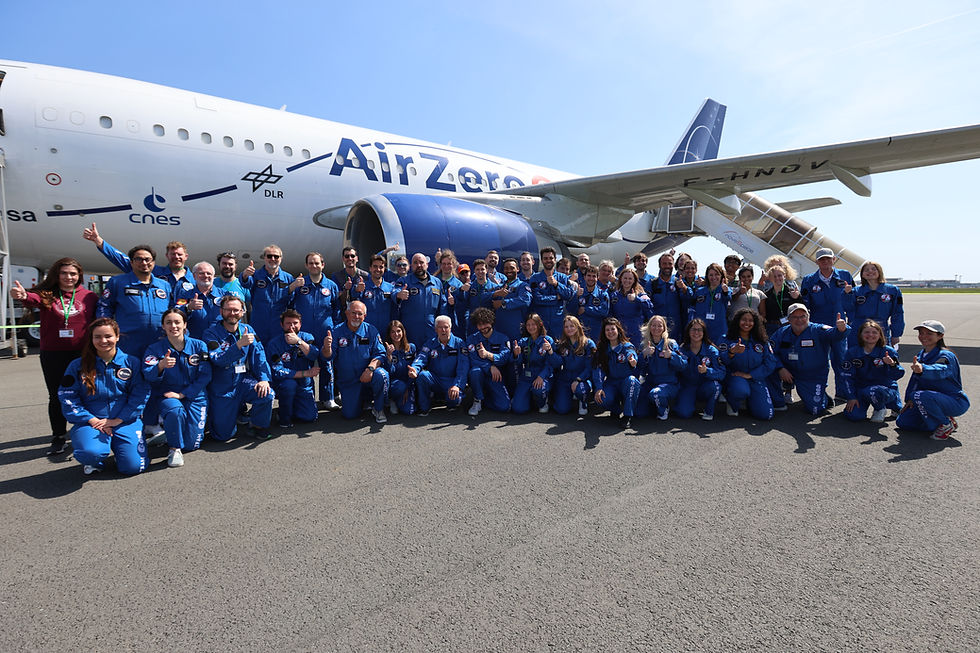
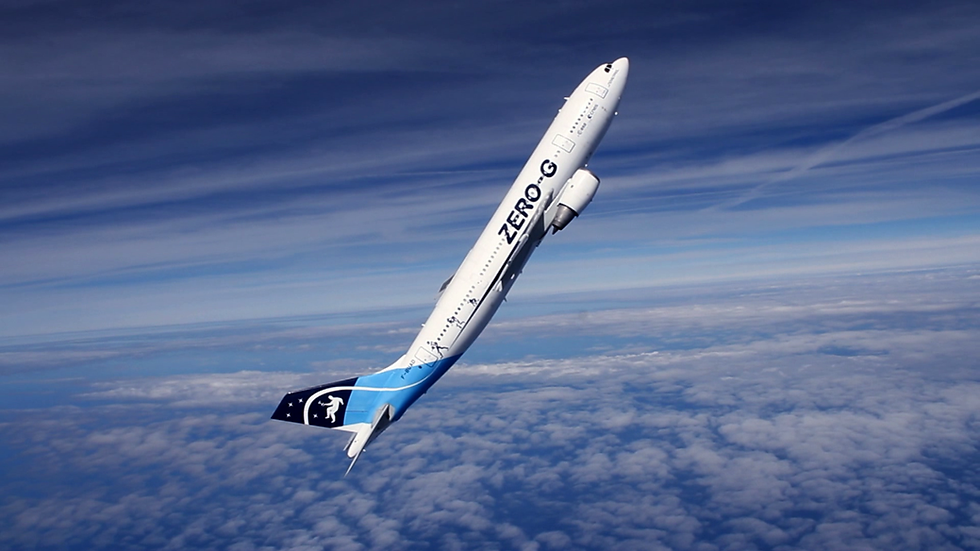
For a second consecutive year, Technavance was back in Bordeaux, France participating in the 89th ESA Parabolic Flight Campaign aboard Novespace’s Airbus A310 Zero G. What an experience – to once again feel the effects of microgravity without even leaving Earth’s atmosphere!
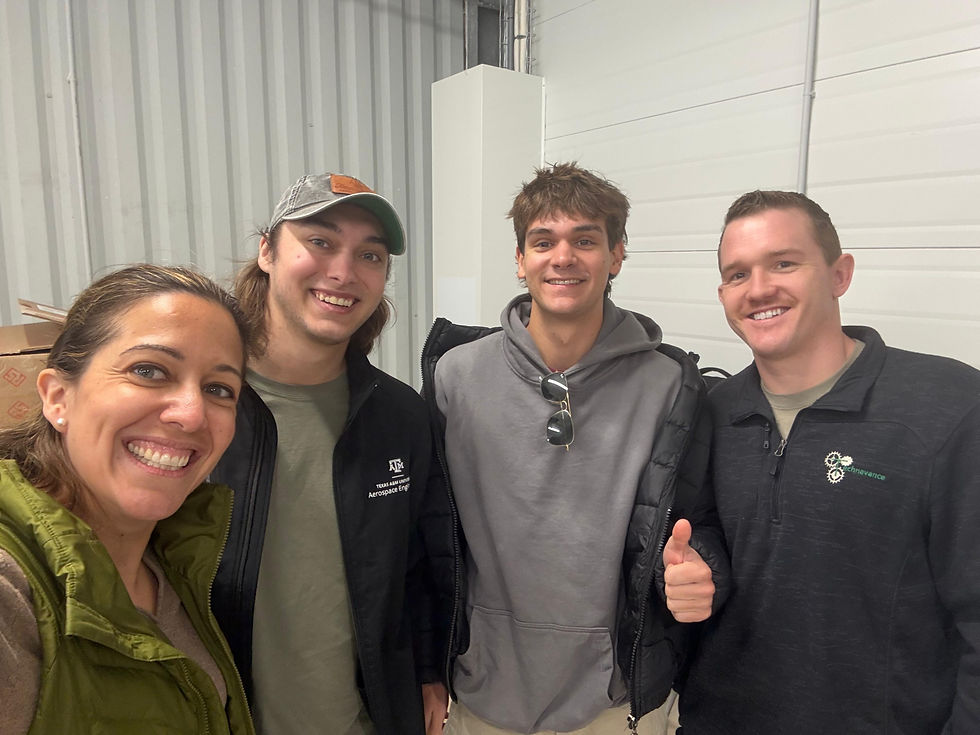
Nate, a Technavance team member was there to support the research team led by Dr. Ana Diaz Artiles, affiliated with both Texas A&M University and University Carlos III of Madrid. Her work focuses on understanding cardiovascular and ocular physiology during microgravity, which are two of the major challenges associated with long-duration human spaceflight.
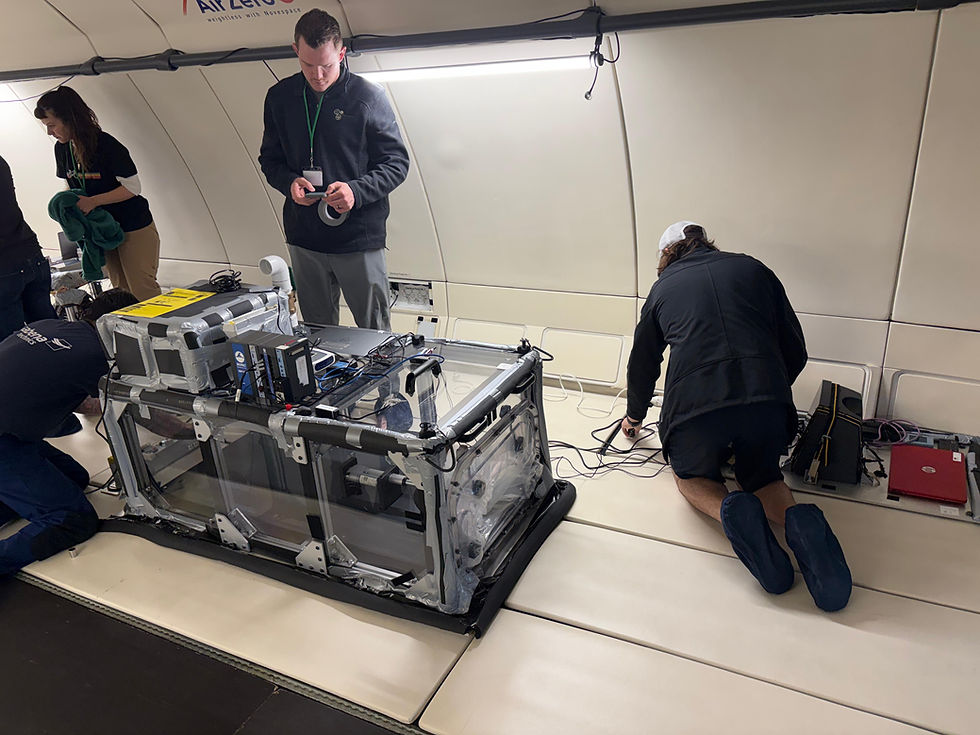
Her research required a custom Lower Body Negative Pressure (LBNP) chamber that was designed and manufactured by Technavance the previous year for use aboard the parabolic flight aircraft. The LBNP chamber is integral to this research as it enables controlled fluid shifts to counteract those occurring during the rapid gravitational transitions of parabolic flight. As exciting as it was for Nate to experience weightlessness a second time, there was more to his being on-site than just that.
Engineering Challenge #1 – too loud!
As expected, being onboard an Airbus A310 Zero G plane during parabolic flight is an extreme and challenging environment. While participating in the 87th ESA Parabolic Flight Campaign in September of 2025 a problem had surfaced, the noise created by the vacuum pump was too loud. With more than 10 experimental set-ups and research teams on the plane, along with the necessity to hear the critical audio cues for accurate timing during parabolas, it was imperative that this noise be reduced. During the previous campaign, we measured roughly 90 decibels (dB) onboard the aircraft. Novespace engineers provided us with a new target, <80 dB. While a 10 dB reduction may not sound significant, reducing sound on a logarithmic scale is anything but simple…
We have a solution!
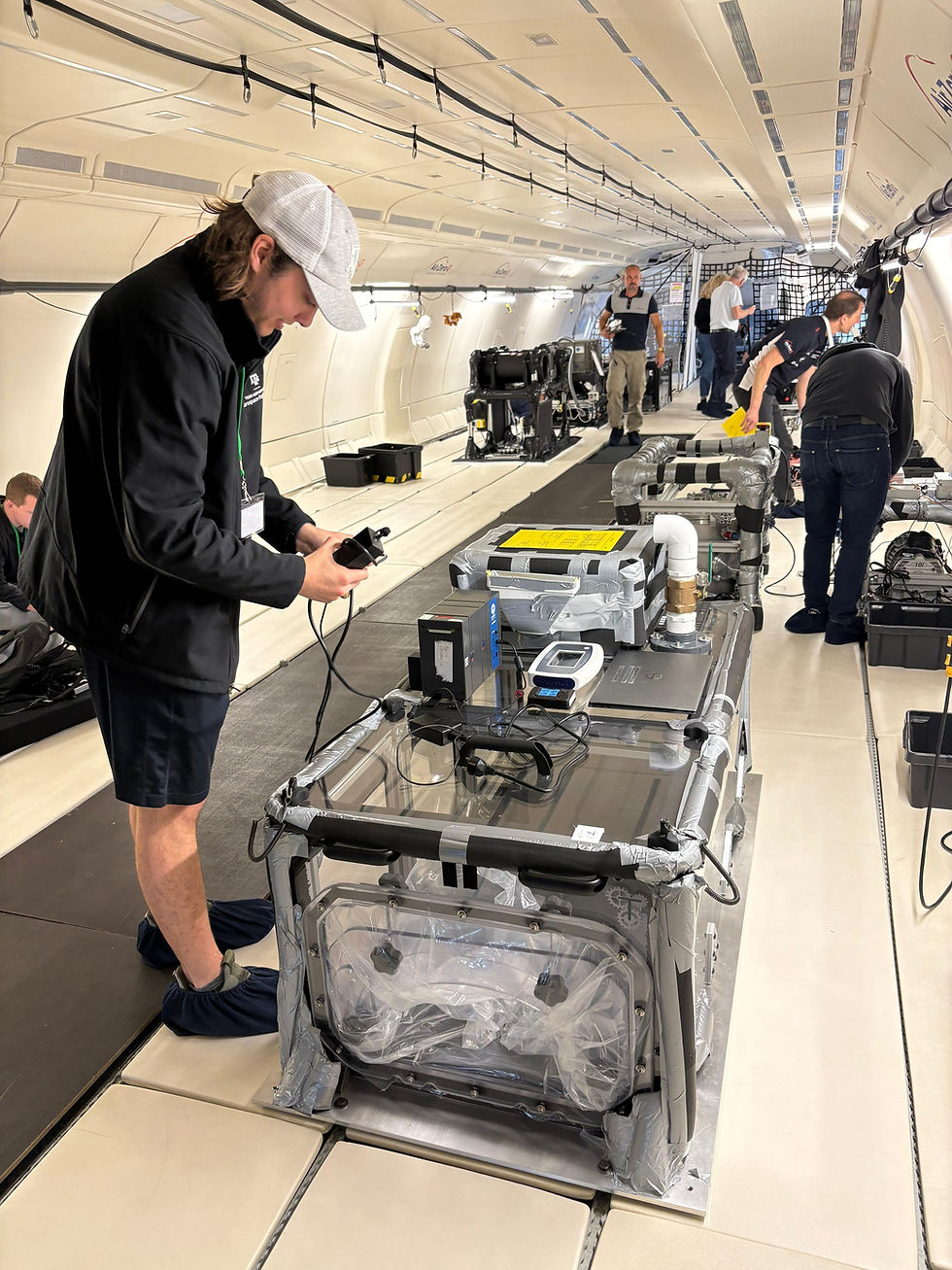
After brainstorming with our team and Dr. Diaz Artiles’ research group after the first flight, we decided the best solution was to install a speed regulator for the vacuum pump. By reducing the pump speed, we could reduce the noise. Even though this would also reduce the lowest negative pressure achievable in the chamber, the pump would remain powerful enough to achieve the negative pressure in the chamber that the research required, so the tradeoff was manageable.
Engineering Challenge #2 – hmmm, maybe we don’t?
However, when Nate arrived onsite to install the speed regulator prior to the second parabolic flight campaign, another challenge surfaced. During the first campaign we had also discovered that the vacuum pump generated an inrush current of approximately 80 amps during startup, which is far more than the Airbus A310 Zero G could safely handle in flight. To solve that issue, we had installed a soft-start module that successfully reduced this inrush current to acceptable levels. But now we found that combining the soft-start module and the new speed regulator inline created a new problem - the pump no longer received enough power to start.
Engineering Challenge #3 – time & resource constraints.
The rapidly approaching parabolic flight days meant the window to find a solution was closing and Novespace’s flight approval procedures meant we were unable to add any new electrical components. So, we went back to the basics and focused on simple, mechanical noise-dampening. After a run to Leroy Merlin (the French Home Depot – how cool!), we gathered the necessary materials. This was followed by a little ‘MacGyver’ engineering and a couple of hours later we had our Elegant Solution, as we like to call them in-house. We had built a custom noise-absorbing foam enclosure around the electronics box, added internal acoustic foam, and fabricated an acoustic vent system for one of the cooling fans. The result: noise levels dropped to ~75 dB, comfortably below the new target!
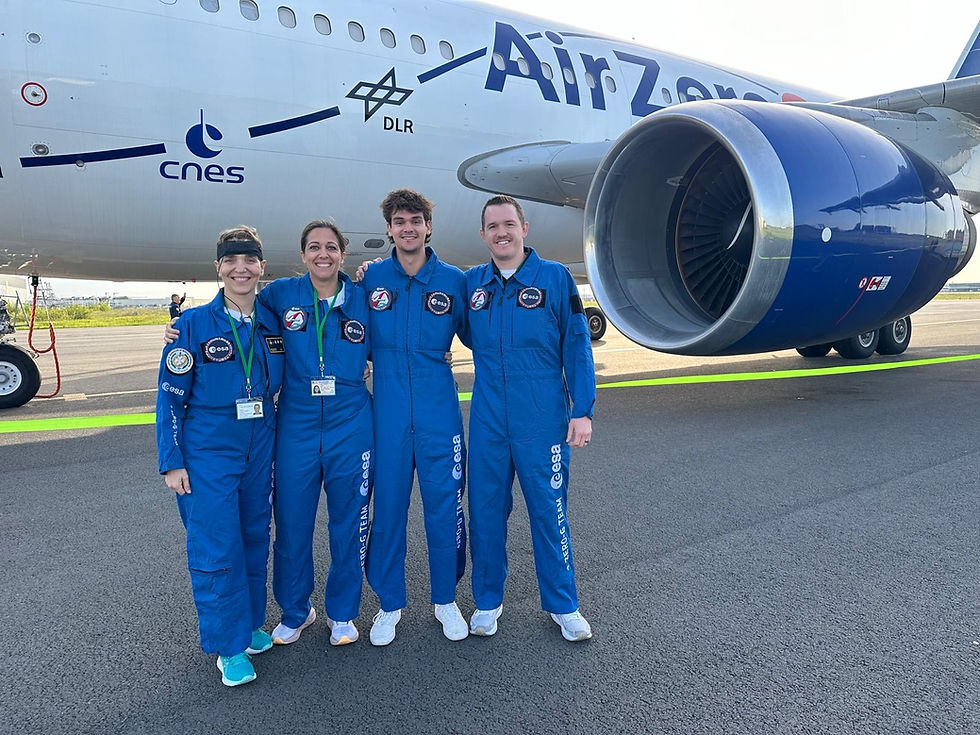
Ready to go!
After passing all preflight requirements, Dr. Diaz Artiles and her team proceeded with baseline data collection on their subjects. Then came the three days of parabolic flight! Each parabola consists 3 parts: Pull up ~30 seconds at 1.8 g, Parabolic arc ~30 seconds at 0 g, Pull out ~30 seconds at 1.8 g, followed by recovery ~60 seconds at 1 g. This gets repeated 30 times per flight! For the research team, the flight campaign went exceptionally well. The subjects all did well, instruments performed well, robust data was collected, and most impressively, everyone walked off the aircraft steady on their feet and ready to do it again.
The momentum created by both this campaign and the previous one continues to build! Dr. Diaz Artiles has already been selected to fly again during the fall 2026 campaign as she continues her quest to understand cardiovascular and ocular physiology in microgravity with the far-reaching goal of enabling long-duration human spaceflight.
Technavance is honored to be a small part of her journey. For a small business like us, every experience like this is educational and contributes to shaping who we are and what projects we choose to do. While this is one of the coolest and most unique projects we have worked on to date, we believe it is just one example of the Elegant Solutions Technavance plans to continue searching for when engineering for extreme environments.
Stay tuned… we have new capabilities and developments coming later this year!